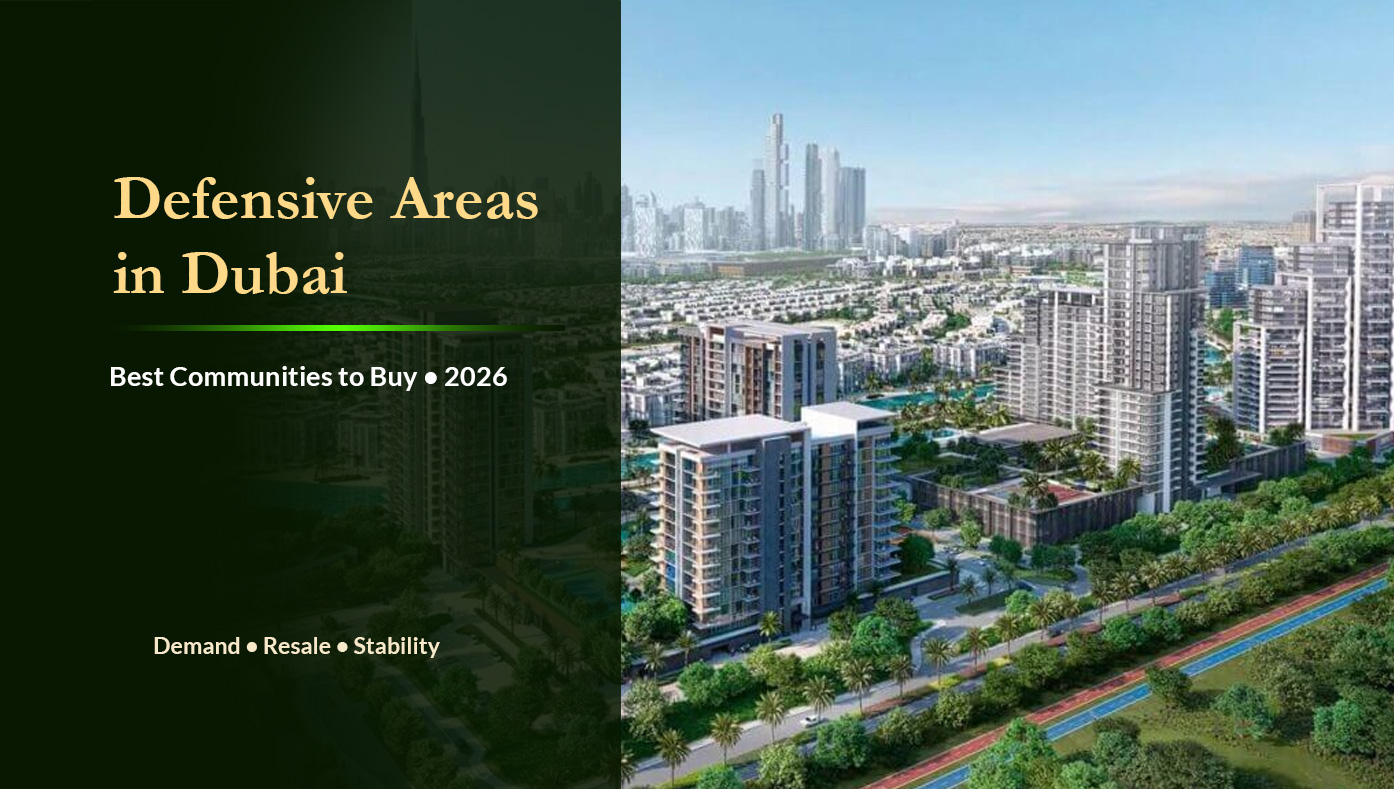
Best Areas to Invest in Dubai in 2026: A Strategic Guide for Serious Property Investors

Where Smart Global Buyers Are Putting Their Capital — And Why Location Still Defines Long-Term Success
Every investor who begins researching how to invest in Dubai eventually reaches the same question: Where exactly should I buy? Dubai offers dozens of master-planned communities, waterfront developments, luxury towers, and emerging off-plan districts. But not all locations perform the same — and not all areas fit the same investment objective.
Some zones are built for strong rental income. Others are designed for long-term capital appreciation. A few balance both. In 2026, Dubai’s real estate market is mature, competitive, and globally visible. That means investors must move beyond generic advice and evaluate communities with strategic clarity.
Before selecting any area, it’s essential to understand the broader direction of the Dubai real estate market, because location performance always interacts with market cycles.
What Makes an Area “Best” for Investment?
The “best” area is not universal. It depends on your objective.
- Are you building rental income?
- Are you targeting appreciation over 5–7 years?
- Are you structuring for Golden Visa eligibility?
- Are you planning short-term holiday rental?
- Are you building a multi-asset portfolio?
Your strategy determines your geography.
- Jumeirah Village Circle (JVC) – Strong Rental Yield Foundation
If your primary goal is rental income, JVC remains one of the most consistently searched and transacted communities in Dubai. Entry prices remain relatively accessible compared to premium waterfront zones, yet tenant demand continues to grow.
JVC attracts:
- Young professionals
- Small families
- Corporate tenants
For investors focused on income, this area aligns well with projections discussed in the Dubai rental yield guide.
However, micro-selection matters. Not every building performs equally. Service charges and supply pipeline must be evaluated carefully.
- Business Bay – Central Positioning with Professional Tenant Demand
Business Bay continues evolving into a mixed-use powerhouse. Its proximity to Downtown, commercial hubs, and metro connectivity makes it attractive for both long-term leasing and short-term rental.
Investors who want central exposure without paying Downtown premiums often look here. Rental demand is stable, and resale liquidity remains strong.
If financing your purchase, review the structured repayment insights in the Dubai mortgage guide before entering premium central districts.
- Dubai Hills Estate – Appreciation with Family Stability
Dubai Hills has matured into one of the most strategically positioned master communities in the city. Infrastructure expansion, retail growth, schools, and green space create strong family-oriented demand.
While rental yield percentage may be slightly lower than mid-market zones, appreciation potential remains strong — especially when aligned with long-term projections in the Dubai appreciation forecast.
This area suits investors balancing income and capital preservation.
- Dubai Marina – Liquidity & International Appeal
Dubai Marina remains one of the most internationally recognizable districts. Waterfront lifestyle, short-term rental viability, and consistent tenant demand keep this area resilient.
Investors entering Marina often prioritize:
- Liquidity
- Resale flexibility
- Short-term rental potential
However, building-level differentiation matters greatly in this competitive zone.
- Downtown Dubai – Prestige & Capital Preservation
Downtown Dubai is less about maximum yield and more about brand-backed value stability. Properties here carry global recognition and often appeal to high-net-worth buyers.
For investors considering luxury apartment for sale in Dubai or premium waterfront exposure, Downtown remains a benchmark location.
- Emerging Off-Plan Master Communities
Emerging districts offer early-entry advantage, especially for investors seeking appreciation uplift over construction timelines. However, off-plan investment requires deeper due diligence.
Before committing capital to off-plan properties in Dubai, investors should review structured analysis in the Dubai off-plan investment guide.
Developer strength, delivery track record, and future infrastructure development are essential evaluation factors.
Freehold Ownership & Legal Framework
All major investment communities listed above fall within designated freehold zones in Dubai, allowing foreign investors full ownership rights.
This legal clarity significantly reduces structural risk compared to many global markets.
How to Choose the Right Area for You
Instead of asking, “What is the best area?” ask:
- What is my capital range?
- What return profile am I targeting?
- How long do I plan to hold?
- Do I prefer income stability or appreciation growth?
Working with a leading real estate agency in Dubai ensures area selection aligns with both financial modeling and long-term strategy.
Common Mistakes When Choosing an Area
- Chasing social media hype
- Ignoring service charges
- Buying without rental modeling
- Failing to analyze supply pipeline
- Not defining exit strategy
Dubai vs Global Markets: Why Location Strategy Matters More Here
Dubai is highly dynamic. Infrastructure expansion can rapidly elevate emerging districts. However, timing is critical. Entering too early without developer strength increases risk. Entering too late reduces appreciation margin.
Strategic location selection is what separates passive buyers from disciplined investors.
Final Investor Perspective
The best areas to invest in Dubai in 2026 are not defined by headlines — they are defined by alignment. JVC supports yield-focused investors. Business Bay provides central balance. Dubai Hills delivers long-term family stability. Marina offers liquidity. Downtown preserves prestige.
Your strategy determines your map.
If you are planning to buy property in Dubai, focus less on trends and more on fundamentals. When location selection aligns with disciplined planning, Dubai remains one of the most compelling real estate markets globally.