Payment Plans & Affordability in Dubai Real Estate: How Investors Start with Easy Plans in 2026
Dubai’s real estate market has evolved into one of the most investor-friendly property ecosystems globally, not only because of its strong returns but also due to its flexible payment structures. For many investors, affordability is no longer a barrier to entry, thanks to innovative developer-backed payment plans that make property ownership more accessible.
In 2026, one of the key drivers behind rising property demand in Dubai is the availability of structured, low-entry payment plans, especially in off-plan developments. These plans allow investors to secure high-value assets with minimal upfront capital while benefiting from long-term capital appreciation and rental income.
Understanding how these payment plans work and how to leverage them strategically can significantly improve investment outcomes.
Why Payment Plans Are Transforming Property Investment
Traditionally, real estate investment required significant upfront capital or immediate mortgage approval. However, Dubai developers have redefined affordability by introducing phased payment models that spread the financial commitment over several years.
This shift has made it easier for:
- First-time investors entering the market
- International buyers without immediate financing
- Portfolio investors looking to diversify assets
Instead of paying the full property value upfront, investors can now commit to structured installments linked to construction milestones, making real estate investment far more accessible.
Understanding Typical Payment Plan Structures
Payment plans in Dubai vary depending on the developer and project, but most follow a structured format designed to reduce financial pressure on buyers.
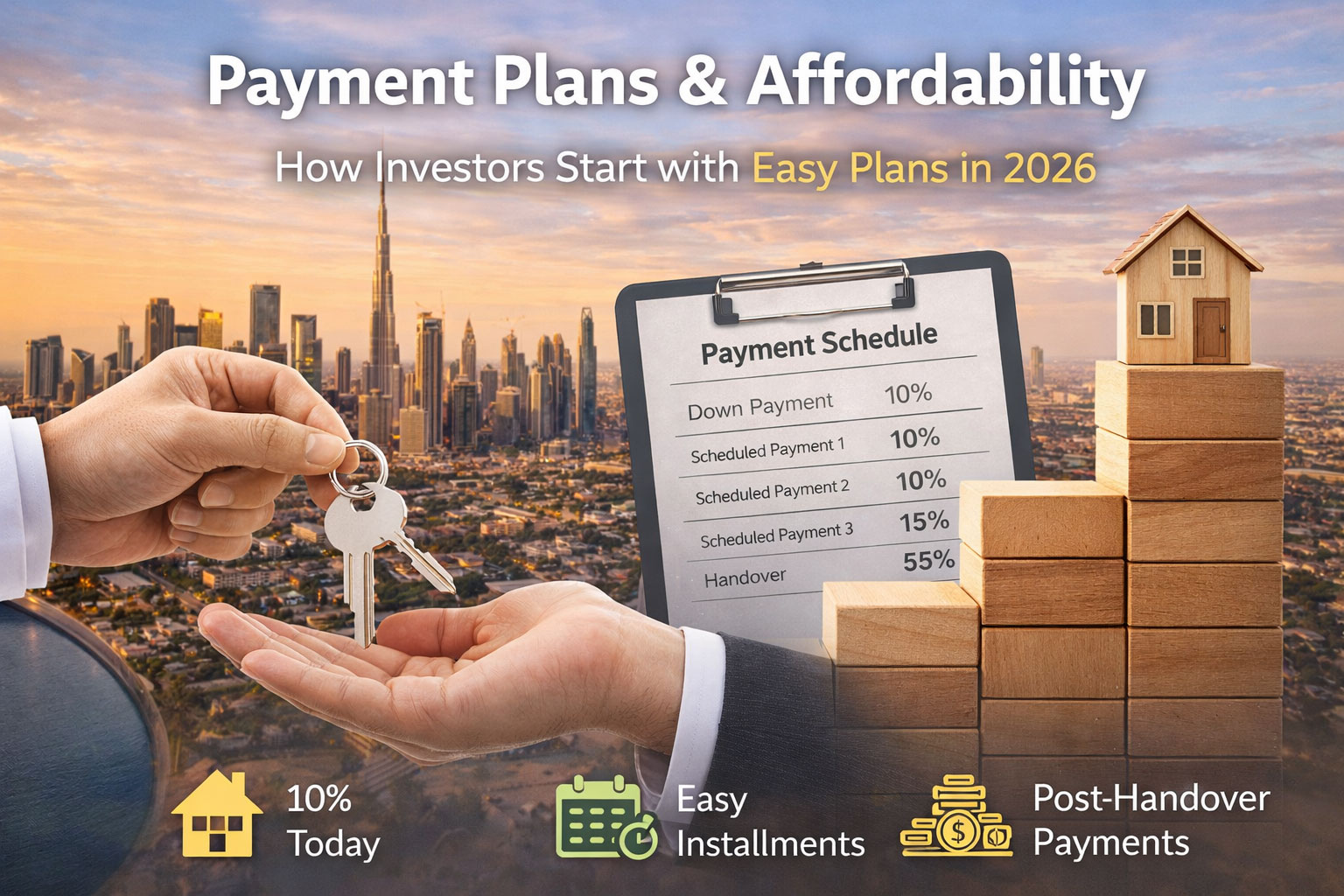
- Down Payment (Initial Investment)
Most developers require a 10%–20% down payment at the time of booking. This initial investment secures the property and locks in the purchase price at the early launch stage.
From an investment perspective, entering at this stage often provides price advantages, as early-phase units are typically offered at lower rates compared to later stages.
- Construction-Linked Installments
The remaining balance is usually divided into installments tied to construction progress.
A typical structure may include:
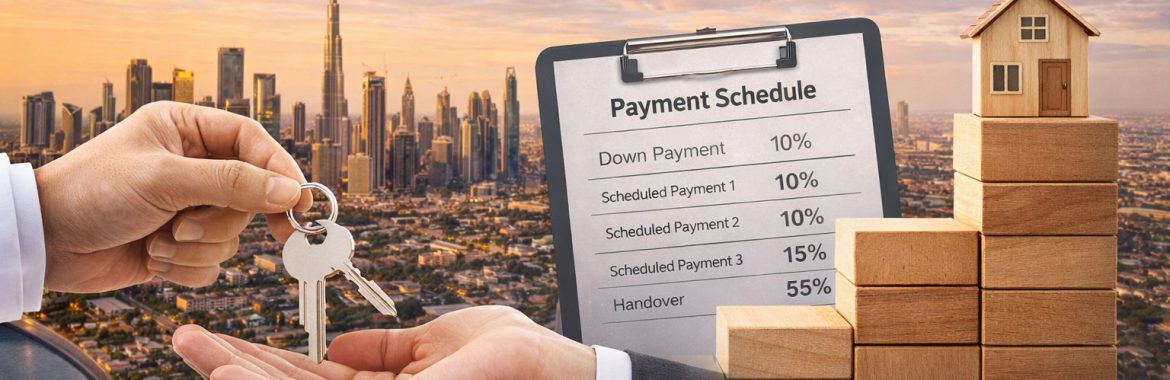
- 10% on booking
- 10% after a few months
- Additional payments during construction milestones
- Final installment upon completion
This approach allows investors to spread payments over 2–4 years, depending on the project timeline.
It also aligns financial commitments with project development, reducing immediate liquidity pressure.
- Post-Handover Payment Plans
One of the most attractive features in Dubai’s property market is the availability of post-handover payment plans.
These plans allow investors to:
- Pay a portion during construction
- Continue paying the remaining balance after receiving the property
Post-handover structures may extend for 2–5 years after completion, enabling investors to generate rental income while continuing to pay for the property.
This creates a self-sustaining investment model, where rental income can partially offset installment payments.
Off-Plan vs Ready Property: Affordability Comparison
When evaluating affordability, investors often compare off-plan properties with ready units.
Off-Plan Properties
Off-plan investments are generally more accessible due to:
- Lower initial entry cost
- Flexible installment structures
- Developer incentives such as fee waivers
These properties are ideal for investors seeking capital appreciation and long-term growth.
Ready Properties
Ready properties typically require:
- Higher upfront payment (often through mortgage financing)
- Immediate transfer and ownership
However, they offer:
- Instant rental income
- No construction risk
While ready properties may require more capital initially, they provide immediate cash flow, making them suitable for income-focused investors.
Why Payment Plans Improve Investment Accessibility
Flexible payment structures significantly reduce the financial barriers associated with property investment.
Key advantages include:
Lower Capital Requirement
Investors can enter the market with relatively low upfront investment, making it easier to diversify across multiple properties instead of committing all capital to a single asset.
Improved Cash Flow Management
Spreading payments over several years allows investors to maintain liquidity for other investments or business opportunities.
Opportunity to Leverage Market Growth
By securing a property at today’s price and paying over time, investors can benefit from market appreciation during the construction period.
This is particularly valuable in a growing market like Dubai, where property values tend to increase as projects near completion.
Strategic Use of Payment Plans for Investors
Experienced investors often use payment plans as a financial strategy rather than just a convenience.
Some common approaches include:
Portfolio Diversification
Instead of purchasing one high-value property, investors can allocate funds across multiple off-plan units using staggered payment plans.
This reduces risk and increases exposure to different market segments.
Exit Before Completion
In some cases, investors choose to sell their property before completion at a higher market value, benefiting from price appreciation without completing the full payment cycle.
Rental Income Alignment
With post-handover plans, investors can generate rental income while continuing to pay installments, creating a more sustainable investment structure.
Risks to Consider
While payment plans offer flexibility, investors should remain aware of potential risks.
- Project delays may affect expected timelines
• Market fluctuations can impact resale value
• Overcommitment across multiple properties can strain cash flow
To mitigate these risks, investors should focus on reputable developers, prime locations, and realistic financial planning.
Conducting proper due diligence and working with experienced advisors can significantly reduce potential challenges.
Market Outlook for Affordable Property Investment
Dubai’s property market is expected to continue growing, supported by strong demand, population expansion, and ongoing infrastructure development.
Flexible payment plans will remain a key driver of this growth, attracting both regional and international investors.
As developers continue to introduce innovative financing structures, property ownership will become even more accessible, further increasing market participation.
For investors entering the market in 2026, leveraging these payment plans can provide a strategic advantage in securing high-growth assets with manageable financial commitments.
Final Thoughts
Payment plans have transformed the way investors approach real estate in Dubai. By reducing upfront costs and offering flexible installment structures, developers have made property investment accessible to a broader audience.
For investors, the key lies in using these plans strategically balancing affordability, risk management, and long-term growth potential.
Whether you are a first-time buyer or an experienced investor, understanding how to structure your investment using payment plans can significantly enhance your returns.
Ready to Invest in Dubai Real Estate?
If you’re considering entering Dubai’s property market, understanding the risks and planning strategically can make a significant difference to your investment success. With the right guidance, investors can identify high-potential opportunities while avoiding common mistakes that affect returns.
Our team can help you evaluate the safest investment options, analyze market trends, and choose properties that align with your financial goals and risk tolerance.
Contact us today for a personalized investment consultation, the latest market insights, and tailored property recommendations designed to help you invest in Dubai real estate with confidence.
References
Dubai Land Department – Real Estate Regulations & Buyer Guidelines
CBRE – UAE Real Estate Market Outlook 2026
Knight Frank – Dubai Residential Market Review
UAE Central Bank – Mortgage and Lending Trends
Global Property Guide – Dubai Investment & Affordability Analysis