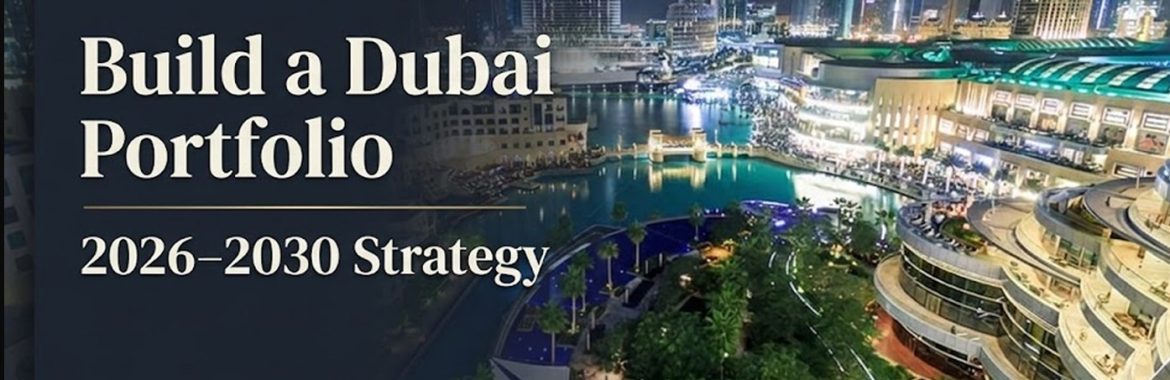
How to Build a Profitable Dubai Property Portfolio (2026–2030): A Smart Investor’s Long-Term Strategy

Beyond Buying One Property — Building Sustainable Wealth in Dubai Real Estate
Most people who begin researching how to buy property in Dubai focus on the first purchase. The first apartment. The first villa. The first rental cheque. But experienced investors understand something much deeper — wealth in real estate is rarely created by one transaction. It is built through structure, timing, diversification, and patience.
Dubai in 2026 presents a rare window where rental performance, infrastructure expansion, foreign ownership protection, and tax efficiency align in a way few global cities can currently offer. If you are exploring how to invest in Dubai, the real question isn’t just which property to buy. It’s how to build a portfolio that compounds intelligently over the next five years.
Before we go deeper into strategy, it’s helpful to understand the broader direction of the Dubai real estate market, because portfolio growth should always move with — not against — the market cycle.
Why Dubai Is Structurally Designed for Portfolio Investors
There is a reason international buyers from the UK, GCC, Europe, and Asia are not just buying homes in Dubai — they are building multi-asset positions here.
Dubai offers:
- No annual property tax
No capital gains tax
• Full freehold ownership in designated zones
• Strong rental yield compared to global cities
• Developer-regulated escrow protection
• International liquidity demand
In cities like London or New York, scaling a portfolio often means absorbing heavy stamp duties and recurring taxes. In Dubai, once your initial transaction costs are accounted for (which are clearly outlined in the Dubai property transaction cost guide), your holding structure becomes significantly more efficient.
Start With Clarity — What Is Your Real Objective?
One of the most common mistakes investors make is buying without defining the bigger picture. Are you building rental income? Are you targeting capital appreciation? Are you aligning with a Golden Visa objective? Or are you trying to balance all three?
For example, if your goal is strong passive income, you may prioritize communities identified in the Dubai rental yield analysis. If your focus is long-term capital growth, then your attention may shift toward master-planned communities highlighted in the Dubai appreciation forecast.
Clarity determines sequencing. Sequencing determines results.
Property One: Your Anchor Asset
The first asset in your portfolio should ideally stabilize you. That usually means a property that produces reliable rental income. Think of it as your anchor — the property that helps you sleep comfortably at night.
High-demand apartment zones such as JVC or Business Bay often provide steady tenant flow, especially when selected carefully. But selection matters. Building quality, service charges, and future supply pipeline influence performance more than marketing brochures ever will.
This is where working with a leading real estate agency in Dubai becomes critical. Portfolio building is not about buying what is available. It is about filtering intelligently.
Balancing Yield With Appreciation
Once your first income-producing asset is stable, the next step is strategic contrast. Instead of buying a similar unit again, consider adding an appreciation-focused property. Communities like Dubai Hills or premium waterfront zones may not offer the highest yield percentage, but they often show stronger long-term value preservation.
This balance between yield-driven apartments and appreciation-backed townhouses or villas reduces volatility in your overall portfolio.
Using Leverage — Carefully, Not Emotionally
Dubai’s mortgage accessibility allows foreign investors to scale responsibly. But leverage is a tool, not a shortcut. When used strategically, it accelerates portfolio growth. When misused, it creates pressure.
Before financing your second or third property, revisit the full Dubai mortgage framework and ensure rental income comfortably supports repayment structure.
Smart leverage creates expansion. Emotional leverage creates stress.
Introducing Off-Plan at the Right Stage
Dubai’s off-plan sector remains one of the most powerful wealth multipliers when timed correctly. Structured payment plans allow investors to secure future assets while distributing capital across construction phases.
But off-plan should complement a stable foundation — not replace it. Understanding developer credibility and escrow protection is critical. Investors should review structured guidance within the Dubai off-plan investment guide before committing.
Diversification by Property Type
A mature portfolio rarely consists of identical units. Studios may generate strong percentage yield, but townhouses often attract longer tenancy duration. Villas may show slower yield but stronger appreciation stability.
Diversification reduces performance dependency on a single tenant demographic.
Reinvestment Discipline
The most underestimated compounding force in real estate is disciplined reinvestment. Allocating even a portion of rental income toward down payments on future assets accelerates portfolio scaling dramatically.
Golden Visa Integration — Strategic, Not Reactive
If residency matters to you, structure property selection to meet Golden Visa thresholds intentionally. Do not chase value simply to qualify. The Golden Visa through property should align with long-term asset quality.
Thinking in 5-Year Blocks, Not 5-Month Cycles
Portfolio growth in Dubai between 2026 and 2030 is likely to reward patient investors who think beyond short-term market noise. Infrastructure expansion, population growth, and master community development support structured appreciation.
Short-term speculation may generate quick wins. Structured portfolio planning builds enduring wealth.
Common Portfolio Mistakes to Avoid
Over-leveraging. Chasing hype launches. Ignoring service charges. Buying without an exit thesis. Selecting property without studying developer reputation.
A strategic portfolio is intentional. A random collection of properties is not.
Final Investor Perspective
Building a profitable Dubai property portfolio is not about buying more — it is about buying smarter, sequencing intelligently, and staying disciplined when opportunities feel abundant.
Dubai offers one of the most dynamic real estate environments globally. But the investors who succeed long-term are those who treat real estate as a structured asset class — not a series of isolated purchases.
If you are serious about investing in Dubai, think in portfolios. Plan in years. Execute with clarity.