Risks in Dubai Real Estate & How to Avoid Them: A Smart Investor’s Guide (2026)

Dubai has built a global reputation as one of the most attractive real estate investment destinations. With zero property tax, strong rental yields, world-class infrastructure, and a growing population, the city continues to attract investors from around the world. However, like any property market, Dubai real estate carries certain risks that investors must understand before committing capital.
A smart investor focuses not only on opportunities but also on risk management. Understanding potential challenges and knowing how to avoid them can help investors protect their capital and maximize long-term returns. This guide explores the key risks in Dubai’s property market and practical strategies to mitigate them.
Market Volatility and Price Fluctuations
Although Dubai’s real estate market has shown strong growth in recent years, property prices can fluctuate depending on global economic conditions, interest rates, and market supply.
For example, during periods of rapid development, the market may experience an increase in property supply, which can temporarily slow price growth. Global economic shifts or geopolitical factors may also influence investor sentiment and demand.
Investors should avoid purchasing property solely based on short-term market hype. Instead, focusing on long-term growth areas and established communities can reduce exposure to market volatility. Conducting thorough research on market cycles and price trends before investing is essential for making informed decisions.
Oversupply in Certain Property Segments
Dubai continues to develop new residential communities and large-scale projects. While this supports the city’s growth, it can sometimes lead to oversupply in specific property segments or locations.
If too many similar properties enter the market at the same time, rental prices and resale values may face downward pressure. This is particularly relevant in areas with high concentrations of new developments.
To avoid this risk, investors should analyze supply pipelines and focus on communities with strong demand drivers such as proximity to business districts, transport infrastructure, and lifestyle amenities. Properties in prime locations tend to maintain value and demand even during periods of increased supply.
Delays in Off-Plan Property Projects
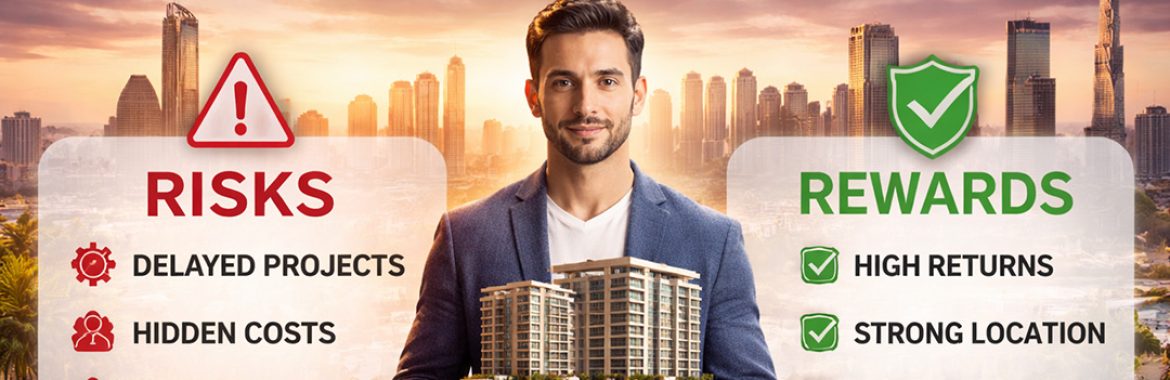
Off-plan properties are popular in Dubai because they often offer lower prices, flexible payment plans, and high potential for capital appreciation. However, construction delays remain one of the most common risks associated with off-plan investments.
Delays can occur due to construction challenges, financing issues, or changes in development schedules. These delays may affect investors who plan to generate rental income within a specific timeframe.
To minimize this risk, investors should always buy from reputable developers with a strong track record of delivering projects on time. Reviewing the developer’s previous projects and verifying escrow protections through the Dubai Land Department can also provide additional security.
Regulatory and Policy Changes
Dubai has developed a highly transparent and well-regulated real estate sector. However, regulations, visa policies, and financing rules can evolve as the government adapts to market conditions and economic goals.
Changes in mortgage regulations, residency visa requirements, or property ownership rules may influence investment strategies. While these changes are typically introduced to stabilize the market and support long-term growth, investors should remain informed about policy developments.
Staying updated through reliable government sources and professional advisors can help investors adapt their strategies and remain compliant with regulatory changes.
Rental Market Risks
Many investors purchase property in Dubai with the goal of generating passive income through rental yields. However, rental markets can fluctuate depending on supply levels, population growth, and economic trends.
Periods of high supply may reduce rental growth in some areas, while tenant turnover or vacancy periods may temporarily affect income stability.
Investors can reduce these risks by selecting properties in high-demand communities with strong rental demand. Locations near metro stations, business hubs, and lifestyle destinations typically attract consistent tenant interest. Hiring professional property management services can also help maintain occupancy and manage tenants efficiently.
Hidden Costs and Financial Planning
Property investors sometimes underestimate the additional costs associated with purchasing and owning real estate in Dubai. Beyond the property price, buyers must consider registration fees, service charges, maintenance costs, and potential renovation expenses.
These additional costs can impact the overall return on investment if they are not planned properly.
To avoid financial surprises, investors should calculate the full cost of ownership before purchasing a property. Creating a realistic budget that includes service charges, property management fees, and potential maintenance expenses ensures a more accurate evaluation of expected returns.
Choosing the Wrong Location
Location remains one of the most important factors in determining property value and investment performance. Some investors make the mistake of choosing properties based purely on price rather than long-term demand potential.
Emerging communities may offer attractive entry prices but may take time to develop the infrastructure, amenities, and connectivity needed to support strong property values.
A balanced strategy is to consider both established areas and carefully selected emerging districts supported by infrastructure development, government planning, and population growth.
How Smart Investors Minimize Risk
Successful property investors approach Dubai real estate with a strategic mindset. Instead of chasing short-term gains, they focus on market research, developer credibility, location quality, and long-term investment potential.
Working with experienced real estate advisors, reviewing market data, and understanding legal procedures can significantly reduce risks. Diversification across property types or locations can also help balance investment portfolios and protect capital during market fluctuations.
Dubai continues to offer one of the most dynamic and promising real estate markets globally. With proper research and risk management strategies, investors can confidently participate in the city’s growth while minimizing potential challenges.
Ready to Invest in Dubai Real Estate?
If you’re considering entering Dubai’s property market, understanding the risks and planning strategically can make a significant difference to your investment success. With the right guidance, investors can identify high-potential opportunities while avoiding common mistakes that affect returns.
Our team can help you evaluate the safest investment options, analyze market trends, and choose properties that align with your financial goals and risk tolerance.
Contact us today for a personalized investment consultation, the latest market insights, and tailored property recommendations designed to help you invest in Dubai real estate with confidence.
References
Dubai Land Department – Real Estate Regulatory Framework & Investor Protection Guidelines.
Dubai Statistics Center – Population and Housing Statistics Reports.
Knight Frank – Dubai Residential Market Review & Outlook 2025/2026.
CBRE – UAE Real Estate Market Outlook and Risk Analysis 2026.
JLL – Middle East Real Estate Market Overview & Investor Insights 2026.
UAE Central Bank – Mortgage Lending Trends and Real Estate Financing Reports.
Global Property Guide – Dubai Property Market Performance & Investment Risk Analysis.